EU leaders warn that reliance on Chinese rare‑earth supplies threatens the transition, prompting a push for alternative sources as the US‑China summit looms.
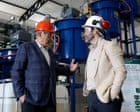
Rafael Moreno, the chief executive of a mining firm that recently inaugurated a demonstration plant in Brazil, warned that the global market for rare earth elements is on edge as the United States and China prepare for a high‑profile summit on Thursday. Moreno said the upcoming meeting between President Donald Trump and President Xi Jinping is a pivotal moment for Europe, which remains heavily dependent on Chinese exports of the strategic minerals that power everything from electric vehicles to wind turbines and defense systems.
Urgent call to diversify supply
“It is paramount to end China’s stranglehold on rare earths,” Moreno told reporters, emphasizing that the EU must secure alternative sources before any potential export restrictions are imposed. He added that the timing is critical, noting that the market is “nervous” about the possibility of Beijing using rare‑earth bans as a geopolitical lever.
Brazilian pilot plant as a foothold
Moreno’s company has built a pilot facility in Brazil’s mineral‑rich interior, designed to demonstrate the technical and economic viability of extracting and processing rare earths outside of China. The plant, which began operations earlier this year, is slated to scale up to commercial production within the next two years, with the goal of supplying European manufacturers directly.
While the demonstration plant is still in its early stages, Moreno highlighted that Brazil’s deposits contain the same suite of elements—neodymium, dysprosium, terbium and others—that are essential for high‑performance magnets and other advanced applications. He underscored that the project adheres to local environmental regulations and aims to meet emerging carbon‑control standards, though he did not disclose specific metrics.
Political backdrop
The upcoming Trump‑Xi summit, the second bilateral meeting of the year, is expected to address trade tensions, technology transfer, and, according to industry observers, the future of rare‑earth trade. Analysts say that any concession by China on export policies could reshape the global supply chain, but Moreno warned that “relying on a single source is a strategic vulnerability.”
European policymakers have already signaled interest in diversifying critical mineral supplies, launching initiatives to map domestic resources and forge partnerships with friendly nations. Moreno’s venture aligns with those efforts, offering a tangible alternative that could reduce the bloc’s exposure to potential export curbs.
Looking ahead
If the pilot plant meets its production targets, Moreno expects the first shipments of Brazilian‑sourced rare earths to reach European ports by 2026. He called on EU officials to engage with his company and other prospective partners to create a resilient, multi‑source supply chain before the next round of geopolitical negotiations.
“The stakes are too high to wait for a single summit to decide our fate,” Moreno concluded. “Europe must act now to secure the materials that power its green transition and security agenda.”


0 Comments