Indiana students design 12‑hour wearable that alerts visually impaired users to obstacles beyond canes, providing haptic feedback for greater independence.
Device Overview
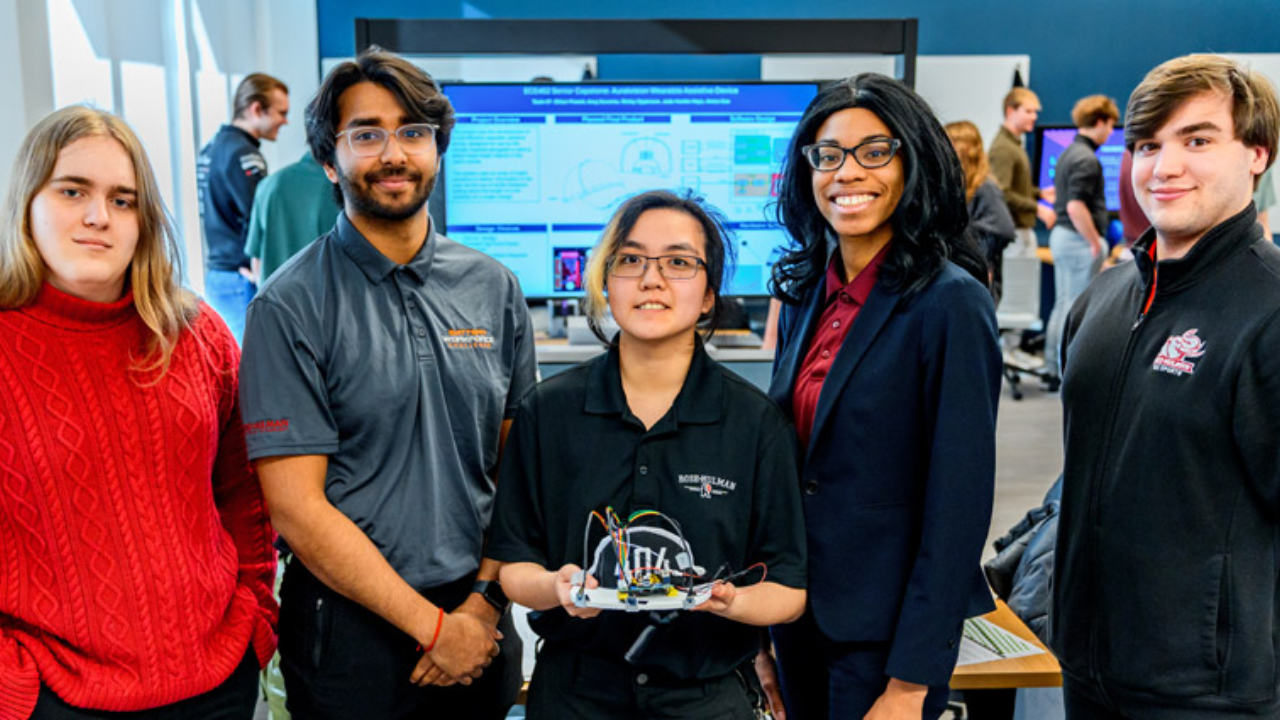
Five Indiana engineering students created a 12-hour wearable that helps visually impaired users detect obstacles beyond a cane or guide dog. The headgear, developed by Rose-Hulman Institute of Technology students, uses advanced sensors to scan the environment and delivers haptic feedback to the wearer.
Sensor and Feedback System
The sensors identify objects in the immediate vicinity and transmit signals to a small vibration module. Users feel a gentle pulse that indicates the presence and direction of an obstacle, allowing them to navigate spaces without relying solely on a cane or dog.
Battery Life and Portability
The device operates for twelve hours on a single charge, matching a full day of typical use. Its lightweight design fits comfortably on the head, and the battery pack attaches discreetly behind the ear.
Impact on Daily Life
By providing continuous obstacle detection, the wearable aims to increase independence for people with vision impairments. The project’s goal is to enhance day‑to‑day experiences, giving users confidence in public settings and private homes.
Future Development
The student team plans to refine the sensor range and integrate voice alerts for additional accessibility. They intend to test the prototype in real‑world environments before seeking manufacturing partners.


0 Comments