Raw exposures of the Andromeda Galaxy require digital processing to uncover hidden dust lanes and spiral arms obscured by faint light and background noise.
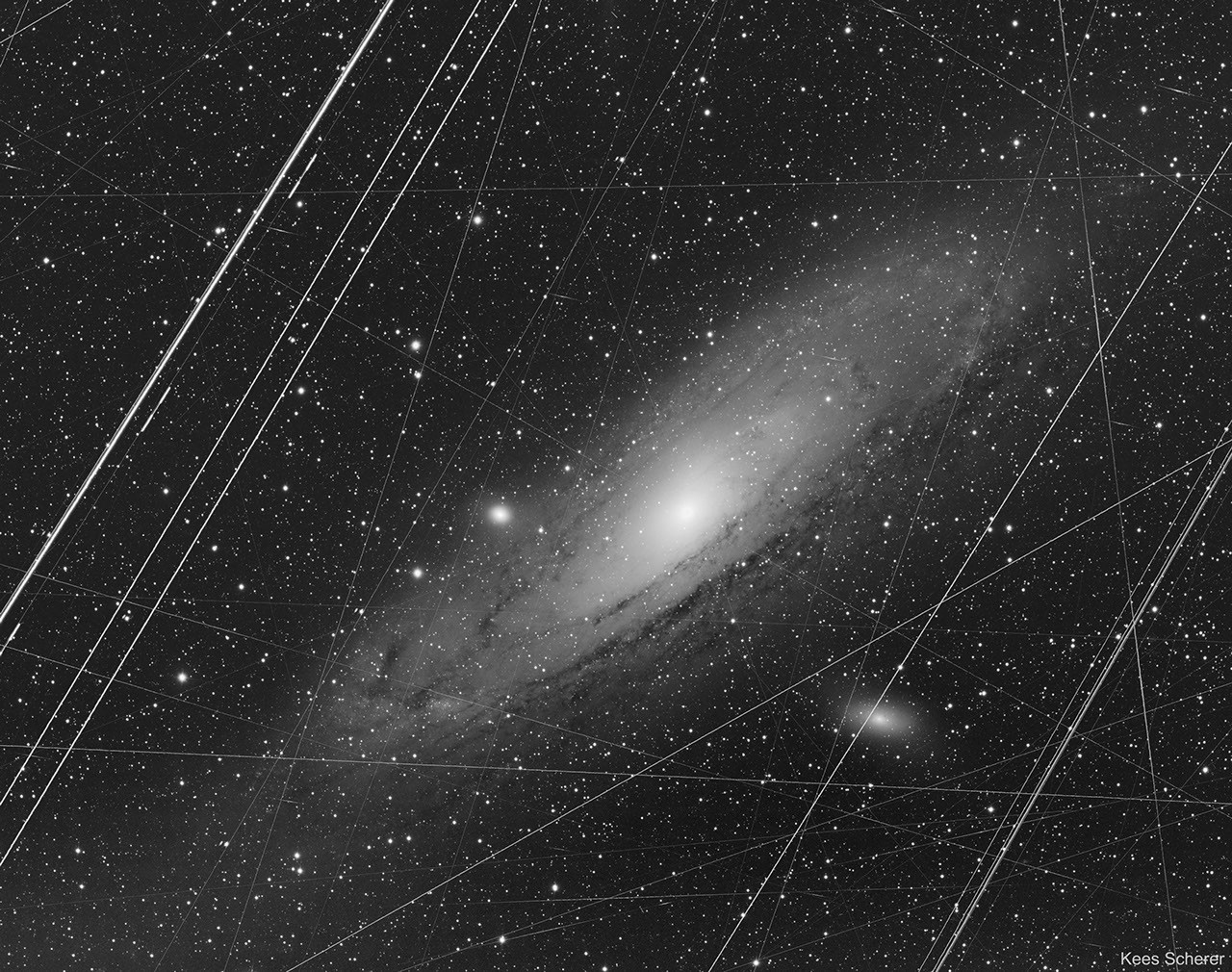
Raw optical exposures of the Andromeda Galaxy often appear faint and washed out, requiring specialized digital processing to reveal detailed spiral arms and cosmic dust lanes.
Astronomers and astrophotographers routinely collect long-exposure sensor data to capture distant celestial targets. Single raw exposures gathered through optical telescopes frequently register only the dense bright core of Andromeda, designated catalog number M31, while outer structures remain submerged beneath background sensor noise and light pollution.
Digital enhancements reveal galactic structure
To produce clear scientific and public imagery, imaging specialists apply a sequence of standard post-processing techniques. Software tools stack multiple frames to increase the signal-to-noise ratio, calibrate background light levels, and stretch high-dynamic-range image curves.
These adjustments separate faint emission light from atmospheric glow without adding synthetic elements to the source data. Unprocessed frames present a grey, nearly featureless oval surrounding the core, whereas fully calibrated composites highlight distinct hydrogen gas clouds, stellar clusters, and intricate dark dust lanes trailing across the galaxy's disk.
Key stages in celestial image processing
- Dark frame subtraction: Removes digital sensor noise and thermal artifacts generated during long camera exposures.
- Image stacking: Combines dozens or hundreds of individual shots to multiply detected photon signals against background noise.
- Histogram stretching: Expands faint shadow details to bring subtle outer galactic arms into view.
- Color calibration: Adjusts color channels based on known stellar spectra to reflect true emission wavelengths.
The Andromeda Galaxy sits approximately 2.5 million light-years from Earth. Spanning roughly 220,000 light-years across, it represents the largest member of the Local Group of galaxies, which also includes the Milky Way.
Despite its massive absolute brightness, the light reaching Earth-based sensors is extremely faint per unit area. Direct visual observation through standard eyepieces rarely exposes the intricate color or structural depth visible in published photography, making photographic calibration essential for observational analysis.
Scientific calibration versus artistic manipulation
Image processing in observational astronomy focuses on data extraction rather than artificial alteration. Digital edits aim to correct hardware limitations, atmospheric distortion, and light pollution to present accurate physical structures.
Astronomers emphasize that raw camera files capture real photons emitted millions of years ago, but human eyes and digital monitors cannot discern those signals without mathematical scaling. The resulting enhanced photographs provide both critical measurement data for researchers and accurate public views of deep-space phenomena.


0 Comments