Geologists have found a lunar-like anorthosite lens in southern Madagascar, offering new insights into Moon rock formation and Earth's geological history.
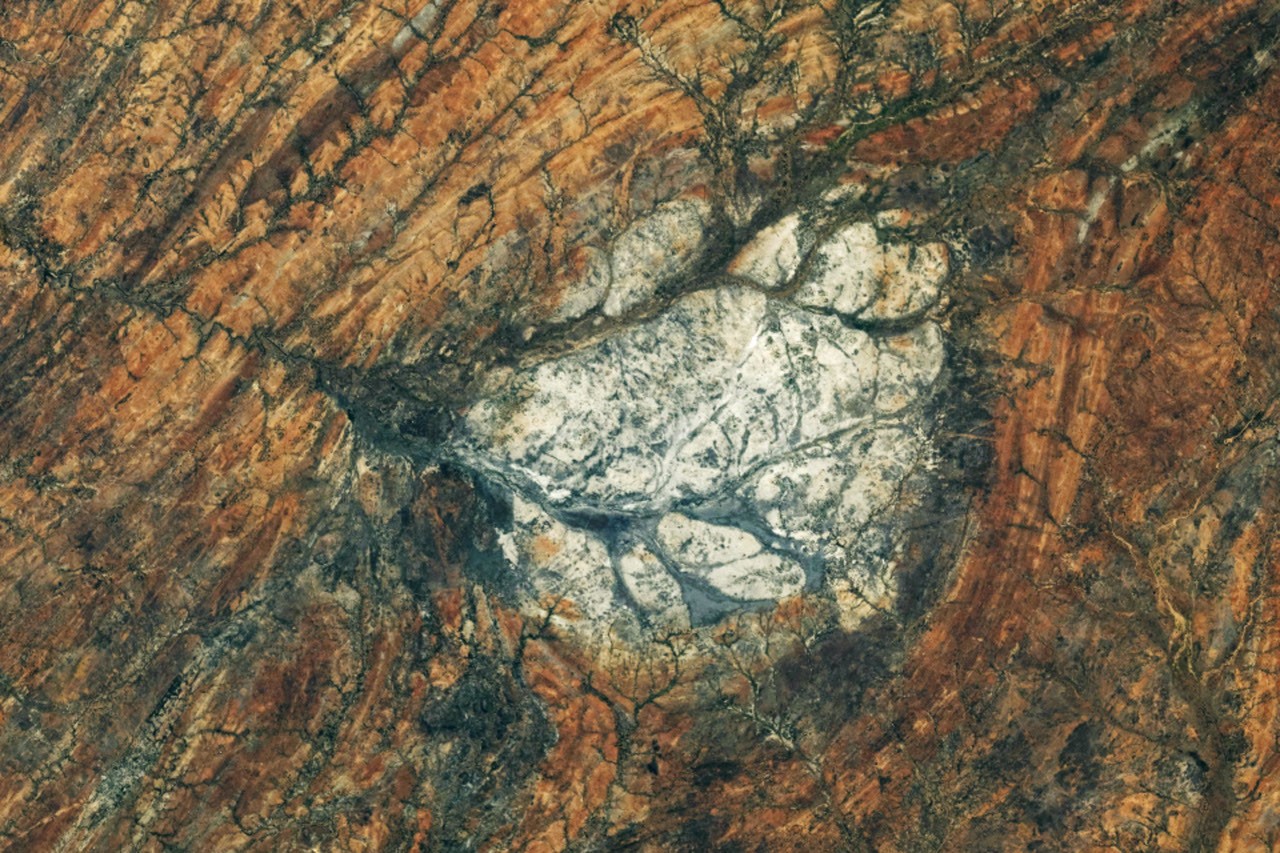
A bright lens of anorthosite, a rock common on the Moon, was found within sheared rocks in southern Madagascar, a report titled "Moon‑Like Madagascar" said.
Anorthosite is a coarse‑grained igneous rock composed largely of plagioclase feldspar. On the lunar surface, it forms much of the highlands and gives the Moon its characteristic bright appearance.
The Madagascar lens appears as a distinct, light‑colored body embedded in a matrix of deformed, sheared rocks. The contrast between the luminous anorthosite and the surrounding material is striking, prompting the report’s description of the find as "moon‑like."
Geological setting
Southern Madagascar hosts a complex assemblage of metamorphic and igneous rocks that have experienced intense deformation. Shearing of the host rocks indicates past tectonic stresses that rearranged the rock layers.
Within this sheared zone, the anorthosite lens retains its bright hue, suggesting it resisted alteration during the deformation process. The report provides no further detail on the size or exact position of the lens.
Scientific relevance
Because anorthosite is prevalent on the Moon, its occurrence on Earth offers a natural analogue for lunar studies. Researchers can examine the mineralogy and texture of the Madagascar lens to compare with lunar samples returned by past missions.
The report does not claim the find to be the first of its kind on the planet, nor does it link the lens to any specific mineral resource potential.
Next steps
Further field work and laboratory analysis are required to determine the lens’s age, formation history, and precise composition. The report suggests that such investigations could clarify how anorthosite bodies become incorporated into sheared crustal zones.
Scientists interested in planetary geology may consider the Madagascar lens as a reference point for future comparative studies between terrestrial and lunar anorthosite formations.


0 Comments